


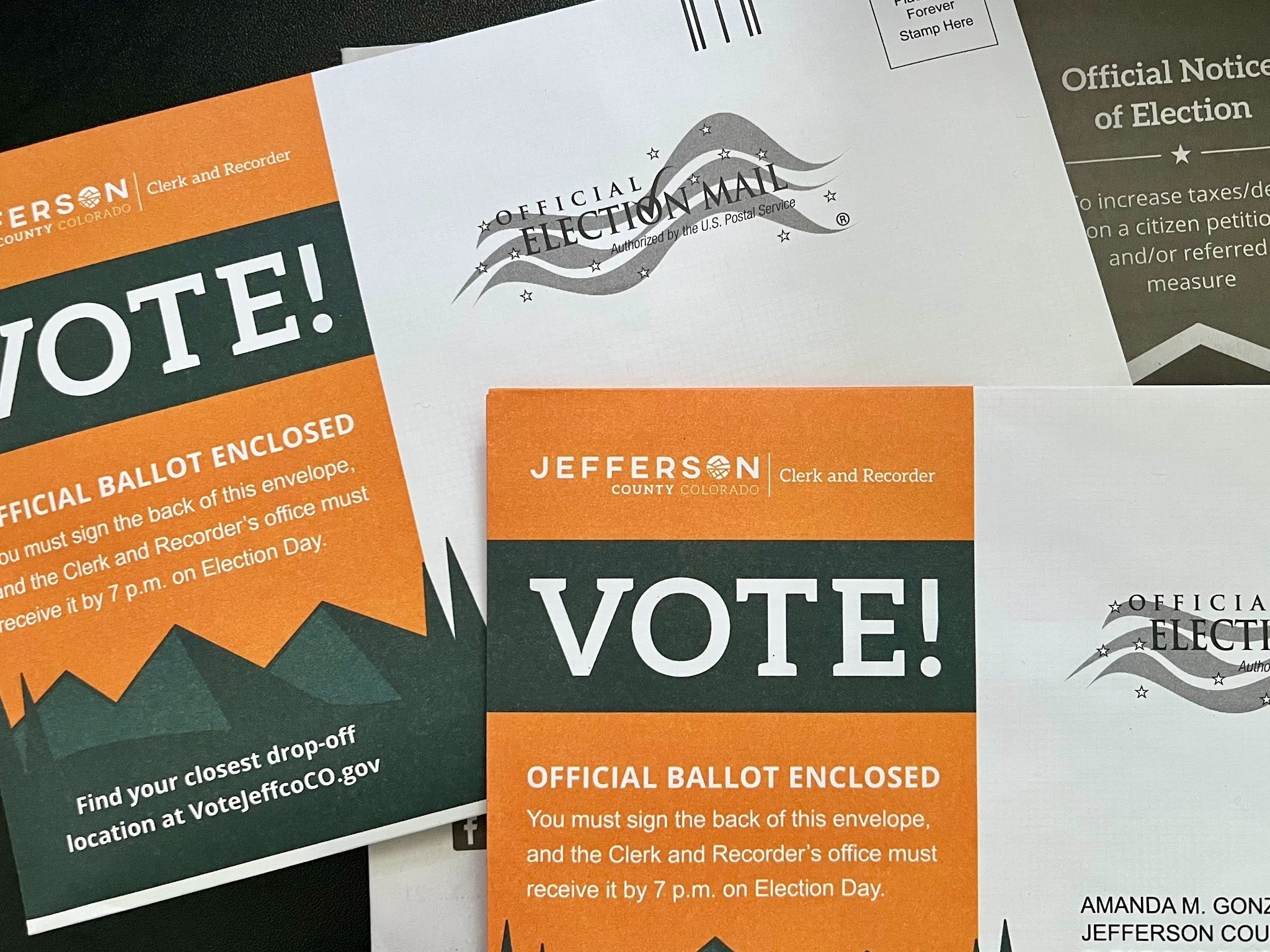
Coloradans will decide this fall whether to make it harder to redraw the state’s congressional election maps outside a process that voters approved in 2018.
The ballot question, called Amendment 86, asks voters to change the state’s constitution to add obstacles to redrawing the districts that decide Colorado’s delegation to the U.S. House of Representatives.
In 2018, voters greenlit an independent commission to draw up congressional election maps every ten years after the national census. The maps the commission drew after the 2020 census created four safe Democratic seats and four safe Republican ones.
But both parties wanted to ask voters this year to change those maps through ballot initiatives. Democrats backed a proposal that would have given them a chance to win seven of those eight seats, and the Republican counterproposal would have given that party a chance to win five of the eight.
The state Supreme Court, however, shot down those plans, saying they would violate a rule that limits ballot questions to a single subject. Since the proposals would have changed both the process for how the districts are drawn, as well as the actual boundaries of those districts, they didn’t meet that requirement.
And that’s likely the impetus for Amendment 86. The proposal specifically targets redistricting attempts like the ones rejected by the state Supreme Court.
If Amendment 86 passes, any proposed election maps would have to go through three public hearings, and then be approved by the independent commission that set the current maps as well as the Colorado Supreme Court.
Amendment 86 would also prohibit election maps that favor a particular political party or divide communities with shared interests.
The ballot question is backed by the conservative activist group Advance Colorado, which is behind several other ballot measures this election cycle.
Supporters say Amendment 86 would reinforce what Coloradans voted for in 2018: an independent commission tasked with drawing congressional maps.
Opponents say voters should be able to approve new maps without needing the sign-off of the commission that drew the current maps in the first place.
While redistricting may seem like a dry, technical process, it’s important because it determines who represents Coloradans in Congress, and it can shape how much influence the state has in the nation’s capitol.
Colorado has been trending more and more towards the Democratic Party over the past two decades, but the state’s representation in the U.S. House remains evenly split between Democrats and Republicans.
The national fight over election maps intensified this year after a major U.S. Supreme Court ruling on the issue, so further redistricting attempts here in Colorado could be coming.
NEED TO KNOW
🧊 Independent data sheds new light on ICE operations in Colorado. A coalition of pro-immigrant advocacy groups called the Colorado Rapid Response Network put out a report recently that’s based on data they’ve collected through a hotline that people can call if they’ve seen ICE operations taking place. My three big takeaways are that ICE has arrested several U.S. citizens, they seem to be increasingly using traffic stops, and questions remain about the agency’s adherence to policies against warrantless arrests. I explain more in this video:
⛓️💥 Rifle Correctional Facility is experimenting with giving more freedom and responsibility to incarcerated people who have little time left in their sentences. Inmates and staff say the program can keep inmates on track and prepare them for release by helping them develop work and life skills. (Colorado Sun / Olivia Prentzel, read more about prison reform in Colorado)
🍽️ Colorado food banks are being strained by increased demand as more people struggle to afford food due to rising prices and federal aid cuts. U.S. Sen. Michael Bennet highlighted the challenges in a roundtable this week at the Food Bank of the Rockies. (Colorado Newsline / Lindsey Toomer, CPR News / John Daley, read more about food insecurity in Colorado)
🐻 Car collisions with wildlife are down more than 90% on I-25 between Larkspur and Monument in the 10 months since a $15 million overpass opened. The overpass is the largest of its kind in North America. Colorado drivers will soon have the option of paying a $5 wildlife overpass construction fee to help fund such projects. (Colorado Sun / Olivia Prentzel)
FOLLOWING UP
🚆 In last week’s newsletter I mentioned a ballot printing error that led to nearly 800,000 Colorado voters receiving ballots with a question about rail transportation taxes that they are not eligible to vote on. This week I got some more information on how officials plan to handle vote-counting for the measure, known as 7A. The bottom line is that the process is going to be similar to when a candidate withdraws from a race after ballots get sent out. I explain more in this video: