


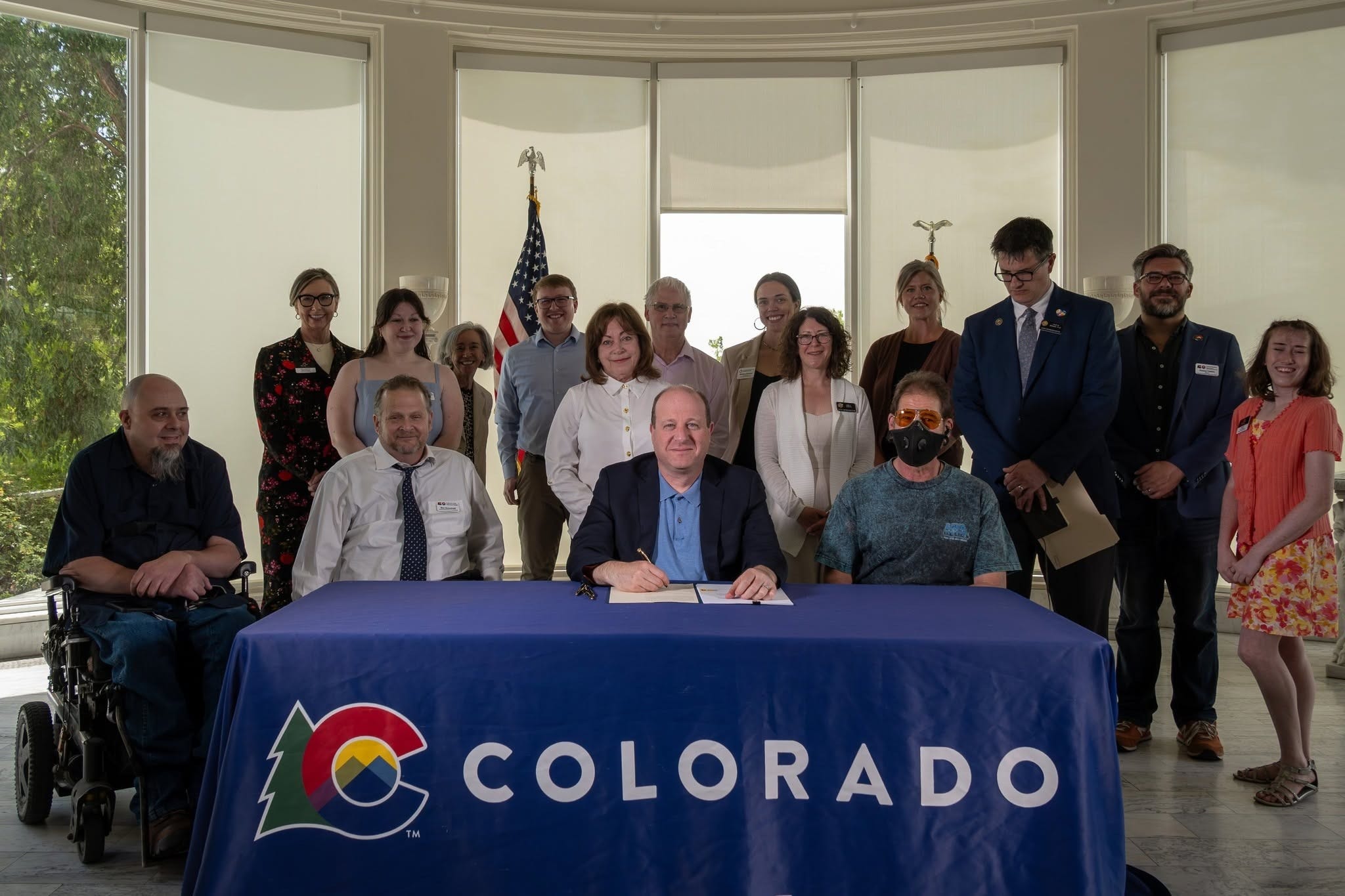
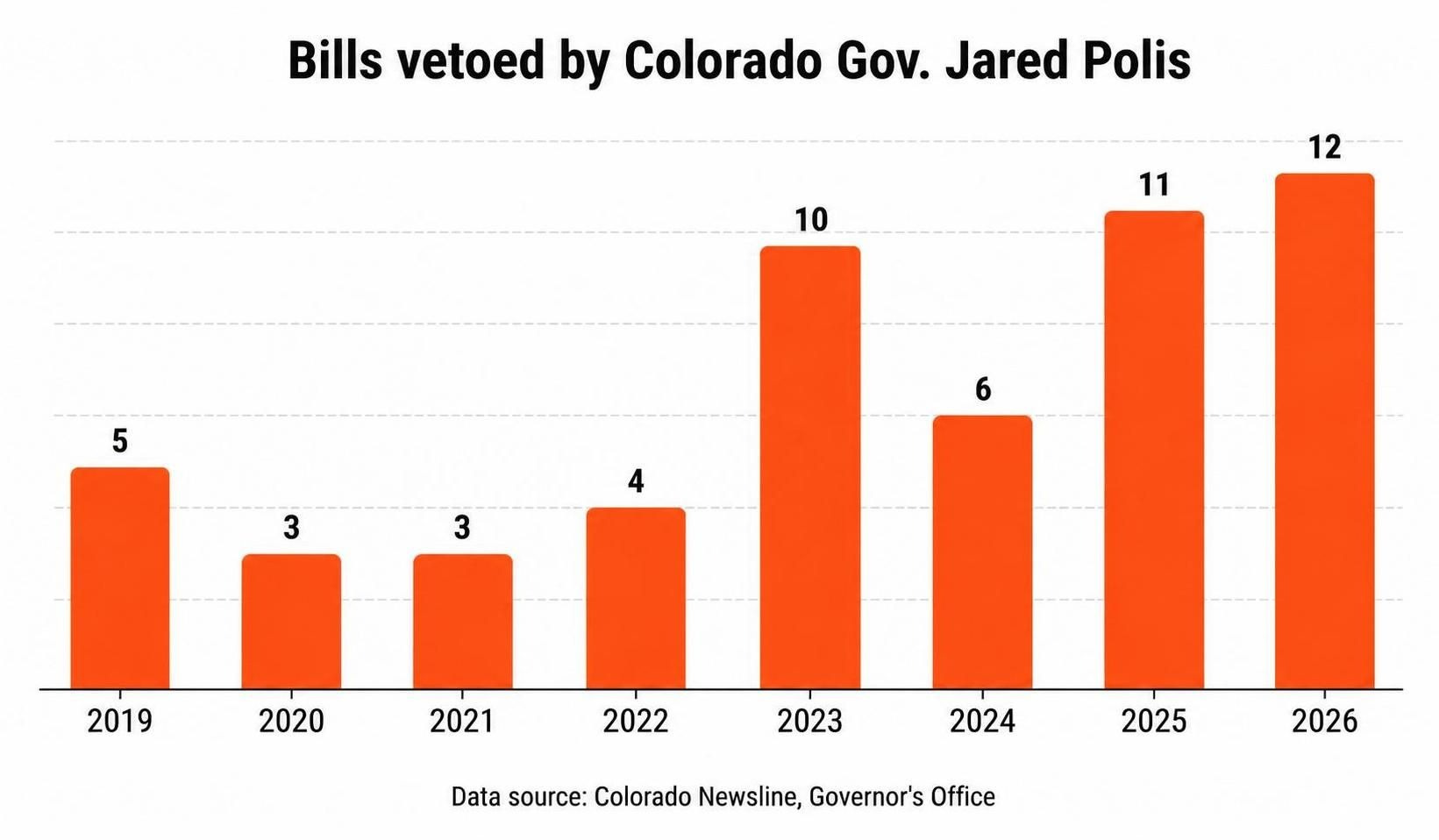
🖋️ Colorado Gov. Jared Polis Polis set a personal record by vetoing a dozen bills passed by lawmakers in 2026.
The vetoes covered a wide range of topics, from social media to union rights to lobbying. Here’s a quick rundown of all 12 bills – what they proposed and why the governor nixed them.
1. SB-147 - This bill was directly aimed at Polis. It would have required the governor’s office and other state agencies to disclose when they try to influence Colorado lawmakers, just like other lobbyists. The bill had strong, bipartisan support from lawmakers, but Polis said it would put unfair limits on the governor’s office.
2. HB-1005: This bill would have made it easier for workers in Colorado to unionize by eliminating a two-vote process that doesn’t exist in any other state. Polis said he opposed the bill because it didn’t take business interests into account.
3. SB26-005 - This bill would have allowed Coloradans to sue over constitutional violations related to immigration enforcement. Polis vetoed the bill, saying it was too narrowly focused on immigration. He said he supported a different bill that would have allowed lawsuits over constitutional violations in a broader range of contexts – but lawmakers didn’t pass that bill.
4. HB26-1210 - This bill would have banned so-called “surveillance pricing” where companies use your personal data to set a price specifically for you. Polis said the bill could prevent companies from offering lower prices, and he said consumers can bring lawsuits under existing anti-discrimination laws if companies unfairly give them a higher price.
5. HB26-1255 - This bill would have required social media companies to respond to law enforcement warrants within 24 hours, and it would have required social media companies to report threats posted on their platforms to law enforcement. Polis signed a similar bill with a 72-hour time limit to respond to warrants, but he said the 24-hour limit is too tight and out of step with other states. He also said the requirement to report threats could stifle free speech.
6. HB26-1286 - This bill would have required a human driver to be present in commercial vehicles over a certain weight. Polis said the bill was too strict and could prevent Colorado from “being on the cutting edge” of automated driving technology.
7. HB26-1355 - This veto basically restores $1.75 million in funding that lawmakers were going to cut from out of school programs. Polis said the state has the money and the programs help kids stay out of trouble and improve their career prospects.
8. SB26-146 - This bill would have prohibited restaurants from including single-use utensils in take out or delivery food unless customers opt in. Polis said compliance could be hard on small businesses.
9. HB26-1418 - This bill would have put a fee on transactions in video games to help pay for youth mental health and education. Polis said it could lead to lawsuits over whether it violates constitutional budget limits.
10. HB26-1236 - This bill would have put some additional consumer-focused protections around arbitration proceedings used to resolve disputes with companies. Polis said it could discourage arbitration and make resolving those disputes more costly and less efficient
11. SB26-134 - This bill would have ended credit card fees on sales tax, but Polis said the bill faced too much legal risk. He said Illinois tried to implement a similar law but it’s been tied up in court.
12. SB26-184 - This bill would have expanded the kinds of cancer considered an occupational disease for firefighters, but Polis said the expansion could discourage fire departments from participating in a program designed to help firefighters with cancer treatment costs.
💸 In response to the state budget explainer I did last week, I got a lot of comments asking about waste, fraud and corruption.
The bottom line is that accountability in public spending is important, but it’s only part of the answer to Colorado’s budget problems.
It’s not like waste, fraud and corruption aren’t real issues. There was a multimillion-dollar corruption scandal in the state court system in recent years, and we’ve also seen a couple different recent cases of healthcare fraud reaching into the tens of millions of dollars.
But the scale of the waste, fraud and corruption is way, way smaller than the scale of the budget problems – we’re talking about amounts that are measured in millions of dollars versus the billions of dollars that advocates say are needed for things like education, healthcare and transportation.
Another thing is that the politicians that talk the most about waste, fraud and corruption tend to argue that the solution is to keep government spending to a minimum so taxpayers don’t get ripped off even more.
But there’s a flaw in that argument too. The solution to waste, fraud and corruption is to add or adjust accountability mechanisms to root out and prevent those problems.
Just keeping the budget small, on its own, doesn’t address any of those issues.
⚡ This week saw a new development in Xcel Energy’s request for what would be its largest-ever rate increase in Colorado.
The company offered to reduce its request to about 70% of the amount it originally sought, though that would still represent the largest rate increase ever.
Consumer advocates oppose the plan, and the public still has a chance to weigh in before and during a hearing scheduled for June 16.
⛓️💥 Next week’s newsletter will include a write-up based on a new video series focusing on prisons.
Colorado is home to the only supermax federal prison in the U.S., and its state prison system is approaching maximum capacity. Check out the series, which explores those issues and looks at potential reforms that could make prisons more humane.