


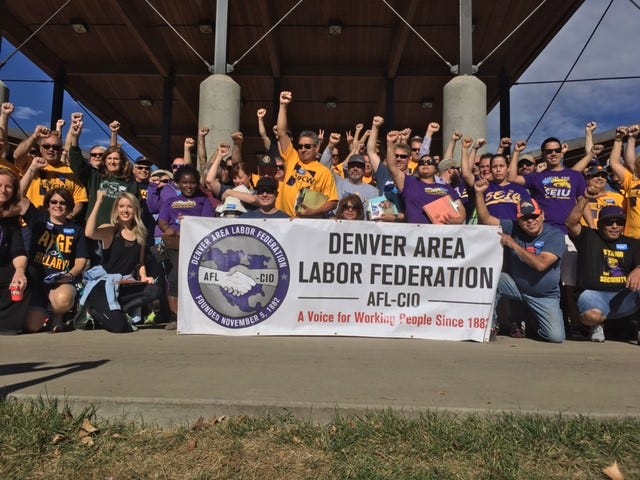
Workers in Colorado will likely continue to face an obstacle to unionization that doesn’t exist in other states, even though lawmakers have once again passed a bill to get rid of it.
Forming a union in Colorado requires workers to take two votes: first, a simple majority of workers has to agree to form the union, then three-quarters of workers have to approve the union’s authority to collect dues from workers’ paychecks.
No other state requires that second vote, though about half of states make it illegal to require workers to pay union dues as a condition of employment.
Colorado lawmakers passed a bill to end the second-vote requirement last week, with some pointing out that unions help workers bargain for better wages and working conditions. But Gov. Jared Polis vetoed a similar bill last year and is expected to veto this one too, saying it doesn’t represent a compromise between labor and business.
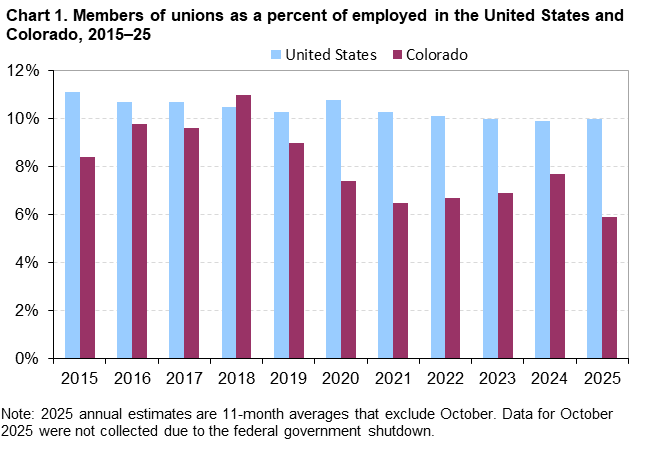
Unions can’t really function without collecting dues from members, so the second-vote requirement represents a big hurdle for workers trying to bargain collectively with their employers. It’s part of the reason why Colorado has one of the lowest unionization rates in the country.
Need to Know
🤖 Colorado consumers could get protections from AI discrimination that look different from what lawmakers originally intended. A new bill would repeal and replace a law passed two years ago that was never actually implemented due to pushback from the tech industry. The new proposal would require companies to disclose when they use AI in consequential decisions like medicine, housing, school and employment, and it would give Coloradans the right to appeal and review those decisions. But unlike the current law, it wouldn’t force AI companies to report on the potential for discrimination or disclose how their systems work. (Colorado Sun, Sum & Substance, Axios, read the bill)
⛓️ Several proposals to reduce overcrowding in Colorado’s prison system are advancing in the state legislature. The measures include making more prisoners eligible to earn time off their sentence, lowering the prison population threshold at which the parole board would have to consider more people for release, and allowing the state parole board to approve releases of certain people who committed crimes when they were under 21 if the governor doesn’t act. Lawmakers have also considered a request by Gov. Jared Polis to open a new prison. (Colorado Sun/CPR, April 2 newsletter, read the earned time bill, read the juvenile offender bill, read the overcrowding bill)
⚕️ Health insurance companies could pass $40 million in fees onto Colorado customers next year under a plan to fund a struggling health care affordability program. State lawmakers are advancing a bill to raise $140 million for the program through $100 million in bond sales and $40 million in fees on insurers, which the companies said they’ll pass onto consumers. Supporters say the plan will prevent thousands from losing coverage, while critics warn it unfairly raises costs for customers and could face legal challenges. (CBS Colorado, Sum & Substance, read the bill)
Feedback, tips or questions? Reply to this email or send a WhatsApp, Signal or text message to 720-355-1474.
Something Good
🛸 I’ve been rewatching the classic 90s TV show “The X-Files” and thinking a lot about my experience as a Millennial kid living through the era of dial-up Internet, brick phones, and big, boxy suits. For that reason, I really enjoyed this essay by a Gen Z author reflecting on their perceptions of the show’s portrayal of that time from the perspective of someone who didn’t experience it themselves. I was surprised at how much I identified with their observations, even though we’re coming to the show from totally different viewpoints.