


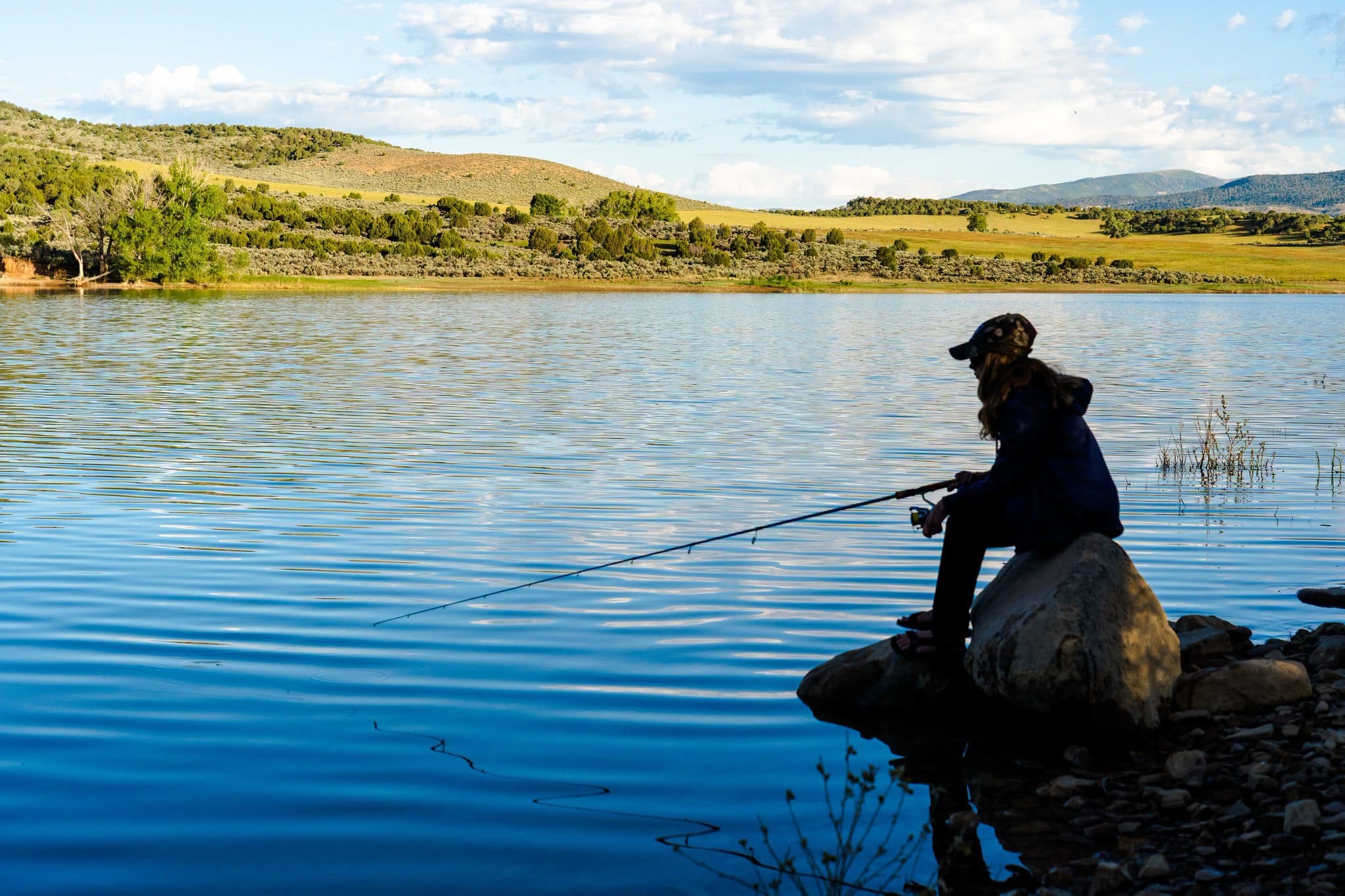
Colorado voters will decide this election whether to add a right to hunt and fish to the state constitution, raising questions about how the proposal could affect the state’s wildlife management policies.
The measure, known as Amendment 83, would establish a constitutional right to hunt and fish using “traditional methods,” though that term isn’t defined in the law. The right to hunt would not cover non-game species, endangered animals or species that are illegal to hunt under federal law.
Additionally, Amendment 83 would make hunting and fishing “the preferred means” of managing fish and wildlife in Colorado. A state law already says effectively the same thing, but this proposal would put it in the state’s constitution, making it harder to change.
However, Amendment 83 also includes a clause that says lawmakers and government agencies can regulate hunting, fishing, and wildlife management in ways that are “necessary for sound scientific wildlife conservation and management, public safety, or to preserve the future of hunting and fishing opportunities.”
The proposal has been backed by nearly $3 million in spending by pro-hunting groups that have ties to firearms companies, sporting goods manufacturers and retailers, and conservative political activists.
That spending is almost 20 times more than the roughly $150,000 spent by opposition groups with ties to progressive-leaning environmental and animal welfar activists.
Proponents say Amendment 83 is needed to protect economically and culturally important activities amid declining participation and changing views among the general public.
But one of the primary concerns raised by opponents of Amendment 83 is that it could set off a wave of expensive lawsuits by hunters and fishers challenging policies they don’t agree with.
Two dozen states have adopted constitutional rights to hunting and fishing. All of those amendments were passed within the last 30 years, except Vermont, whose constitution has included hunting and fishing rights since 1777.
Those policies have sometimes led to litigation, like the case of a North Carolina hunter who unsuccessfully sued the state over laws banning hunting on Sundays. But courts have been reluctant to rule that “right to hunt” amendments override the ability of lawmakers and regulators to make policy.
“They usually come out saying the same things they would before – that the state has the authority to pass these regulations,” said Alex Erwin, a wildlife biologist and law professor at the University of Florida.
Supporters say legal fights are part of the democratic process and won’t cost taxpayers additional money.
“It’s no different than what’s currently done,” said Dan Gates, the executive director of the pro-hunting group Coloradans for Responsible Wildlife Management. “There’s litigation that goes along with wildlife policy throughout the country.”
Opponents of Amendment 83 also say it’s unfair to enshrine hunting and fishing in the state constitution because it creates a special status that wouldn’t exist for hikers, bikers, skiers and other outdoor recreationalists.
“To elevate one user group over everybody else in the Constitution is a pretty wild proposition,” said Mandy Culbertson, the communications director for Wildlife for All, a conservation group opposed to Amendment 83.
Proponents point out that the current wildlife management system in Colorado and the rest of the country uses hunting and fishing license fees as a primary funding source.
“It doesn’t mean that anything needs to be more important than one of the other activities,” Gates said. “But there has to be some consideration about, how do you obtain your objectives.”
It’s not necessarily unusual for state constitutions to include provisions that offer specific rights to relatively niche constituencies.
“State constitutions are just a littering ground for people’s pet projects that you can convince enough voters to vote on,” Erwin said.
But Amendment 83 may not change much in practice, he said.
“It’s pretty easy to justify a lot of hunting restrictions as long as the state can show that there’s some sort of conservation need to do it.”
NEED TO KNOW
🚆 The government body overseeing a major statewide rail project hired a new election chief after a communication breakdown led to 800,000 Colorado voters receiving ballots with a question about rail transportation taxes that they were not eligible to vote on. Former Jefferson County Clerk Pam Anderson took over from Brent E. Butzin, who resigned earlier this month. (Denver Post / Katie Langford) I spoke with Anderson about the ballot error before she took the job. (See last week’s newsletter)
🏫 Public school enrollment is dropping in Colorado largely because the state has fewer children, according to Terri Wilson, an education expert at University of Colorado Boulder. Wilson also highlighted how affordability and housing availability affect where families with children choose to live, and how that impacts local school enrollment numbers. (Rocky Mountain PBS / Cormac McCrimmon)
🍃 Colorado marijuana consumers could be at risk of consuming unsafe products due to lax oversight from state officials. A government audit of the state’s Marijuana Enforcement Division and the Colorado Department of Public Health and Environment found the agencies should improve oversight of private labs that test products and should act more swiftly when they identify product safety risks. The findings echo the conclusions of recent reports by ProPublica and the Denver Gazette. (Denver Gazette / Chris Osher, read the audit)
🧑⚖️ A state judge tossed an effort to nix a ballot measure that would implement a graduated income tax in Colorado. Opponents of the tax proposal, known as Amendment 87, said supporters used paid signature gatherers who weren’t properly registered to get their measure on the ballot. But the judge said that wasn’t serious enough to merit removing the question from voters’ ballots. (The Sum & Substance / Ed Sealover, read more about Amendment 87)
COMING UP
🎉 This week marked the 6-month anniversary of the launch of The Blanket, which means it’s once again time to consider what’s going well and what could be improved. As I mentioned in a recent video, one of the biggest challenges I’m facing right now is financial sustainability. I’m going to slow my production pace in the coming weeks and months to free up time and energy to pursue new funding opportunities and potential partnerships with traditional media outlets. I’ll still use this weekly newsletter as a space to curate accountability and solutions coverage from other outlets, but I really need to focus on how to better monetize my talents and efforts, so you may see less original reporting here in the near term. As always, please feel free to send me any comments or questions that you think might be helpful. Thanks for reading!