


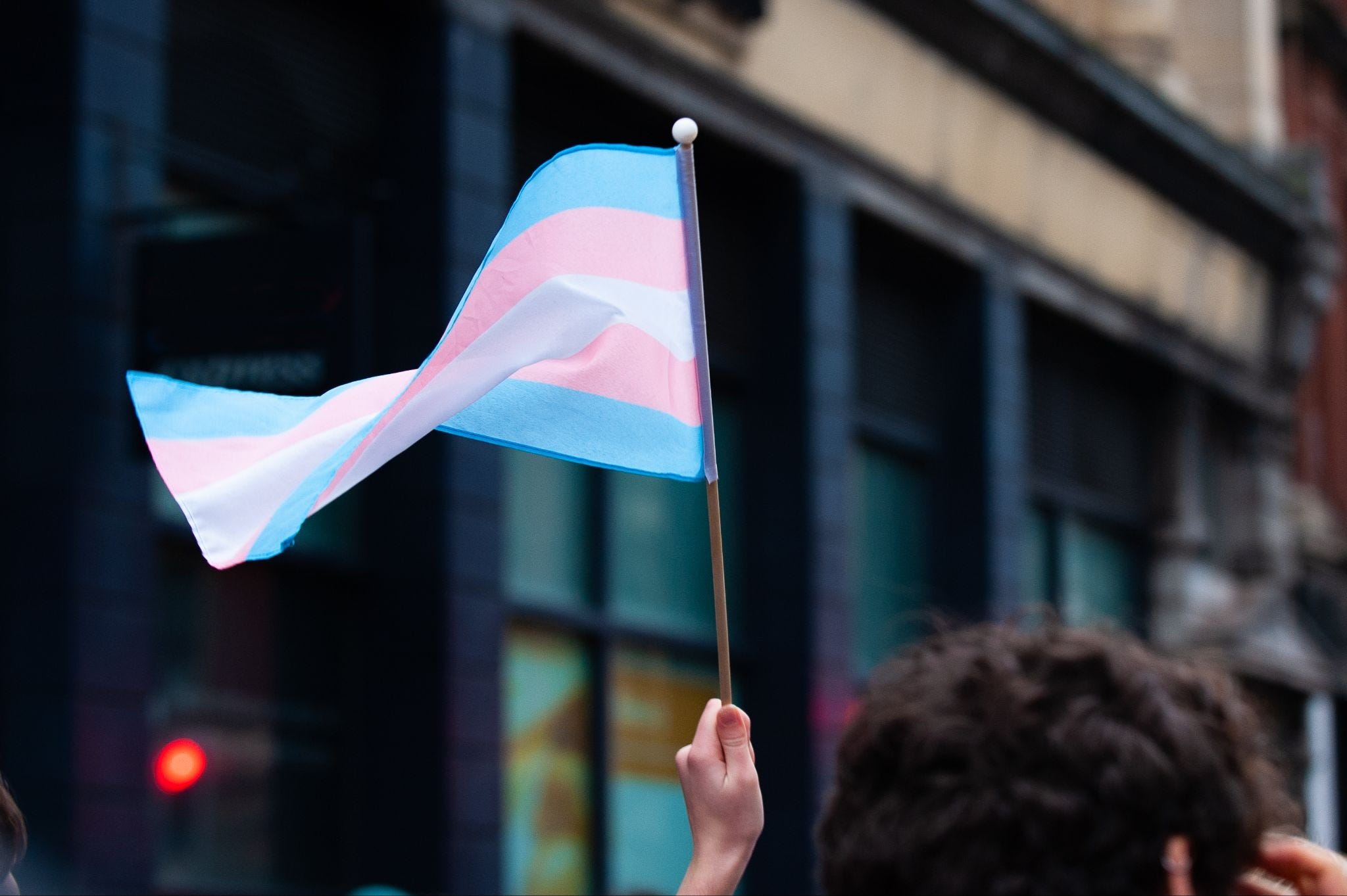
Colorado voters will decide on two ballot measures this fall that could impact trans kids’ ability to participate in sports and receive gender-affirming healthcare.
The measures, known as propositions 134 and 135, come as Colorado is fighting the Trump administration’s efforts to force schools to abandon trans-inclusive policies and hospitals to stop providing gender-affirming care for trans kids.
Both ballot measures would implement policies that are in line with the Trump administration’s agenda.
Colorado has high levels of support for pro-LGBTQ policies, suggesting the measures could face an uphill battle at the polls.
“They’re kind of anti-Colorado,” said Bruce Parker, the executive director of the non-profit advocacy group Rocky Mountain Equality, which is opposing the measures. “I’m just not interested in it and I don’t think the state is either.”
Watch the full interview with Parker below 👇
Who is behind the ballot measures?
The conservative activists Erin Lee of Protect Kids Colorado and Michele Austin of Protect Our Children are behind both anti-trans ballot measures.
Lee and Austin are also the backers of a third ballot measure that would require lifetime prison sentences for child sex trafficking convictions. The Blanket reported last week that tougher penalties may not be the best way to address that issue.
Neither Austin nor Protect Our Children maintain much of a public profile, but Protect Kids Colorado advertises that its mission is to “mobilize the people of Colorado and the Church to engage with biblical and biological truth.”
Lee said she shares her organization’s “biblical worldview” but denied the measures are inspired by Christian beliefs.
“I’m not ashamed of being a Christian, but I can’t emphasize enough that we are a we-the-people grassroots movement, where absolutely everyone is welcome,” she said.
Watch the full interview with Lee below 👇
How would Proposition 134 impact trans kids in sports?
All school sports in Colorado, from elementary through the collegiate level, would be impacted by proposition 134.
The measure would ban transgender girls from playing on girls sports teams, and it would only allow transgender boys to play on boys teams if there’s no girls team to play on. Co-ed teams would remain open to any student.
Schools would be required to adopt policies for determining athletes’ biological sex, which Lee suggested could include DNA testing in the form of a cheek swab.
“Any person who plays sports has to go through a sports physical,” she said. “This would be the least invasive part of that private sex test in the privacy of your doctor’s office.”
The supporters of the measure say it’s meant to ensure fairness and safety for athletes. But multiple studies in recent years have found little evidence of competitive advantages for trans athletes.
Opponents say excluding trans students from school sports puts kids who are already vulnerable to bullying and discrimination at even greater risk.
“It sends a message to their peers that they’re not equal and that they’re different – and it’s dangerous,” Parker said.
How would Proposition 135 impact trans kids’ healthcare?
Doctors would be banned from performing surgeries “altering the biological sex characteristics” of children, if proposition 135 passes. The measure contains exemptions for circumcision and people “born with a medically verifiable disorder of sex development.”
The measure’s backers point to a lack of consensus in the medical community about whether gender surgeries are appropriate for minors. But it is important to note that major medical associations agree that transgender youth should receive gender-affirming care short of surgery.
Gender surgeries for minors appear to be extremely rare in the United States.
Lee said her support for the ban on gender surgeries for minors is informed by her experience of her own child identifying as transgender.
“I have been bullied by medical professionals who said, if you don’t put your child on a medical pathway to transition, she will commit suicide. And that is an impossible position to put parents in,” she said. “I knew it was not right for my daughter.”
Opponents say the measure would interfere with decisions that should be made by families and their doctors, and some warn it could be a step toward further attacks on healthcare for trans people.
“I think that anyone who thinks that this is just about trans youth surgeries is not paying attention,” Parker said. “They’re going to go after the ability to make that decision for adults next.”

NEED TO KNOW
⏱️ Term limits for Colorado legislators implemented in the 1990s have prevented lawmakers from accumulating experience that could make them more effective. A data analysis, combined with a social science research review, found term limits here led to “a weaker legislative branch that is less capable of meeting the complex challenges that the state faces.” (Colorado’s Political Landscape / Brad Jones)
🍃 Colorado marijuana regulators are slow to take action on potentially harmful products, and retailers use loopholes to keep selling them after they’re identified. The state’s rules for ensuring the safety of marijuana products are also more lax than those in other states. (Denver Gazette and ProPublica / Christopher Osher and Evan Wyloge)
🌲 Coloradans are fighting back against the Trump administration’s ramped-up sales of land leases for oil and gas drilling. A pair of wilderness protection groups is suing the administration, and rural residents are banding together to pressure the federal Department of the Interior to stop or slow the sales. (Colorado Newsline / Chase Woodruff, Colorado Sun / Mark Jaffe)
🔬 Missy Woods, a former forensic scientist for Colorado’s state crime lab, was sentenced to ten years in prison on charges related to manipulating over 1,000 DNA tests over nearly three decades working with the agency. (See our previous coverage)
COMING UP
👋 The Blanket’s audience has been growing steadily over the past few months, so I’m taking the opportunity to reintroduce myself to all the new folks. In the video below, I give my two-minute local news reporter origin story. It’s part of an ongoing series of “ask me anything” videos where I answer your questions about how I do my work. Let me know if there’s something you want me to talk about in a future installment.