



Nearly 5,000 people in Colorado have been arrested by federal immigration agents since the start of the second Trump administration, but the increased enforcement is causing more problems than it purports to solve.
Colorado has long been a focus of President Donald Trump’s mass deportation agenda. In October 2024, a month before the election, he named his deportation plan “Operation Aurora,” referring to misleading claims about the Venezuelan gang Tren de Aragua in the Denver area.
Now, data obtained by the non-governmental Deportation Data Project and reported in the Denver Post shows 4,750 people have been arrested since Trump’s inauguration in January 2025. That’s nearly twice the number of arrests in 2023, and more than four times as many as in 2024.
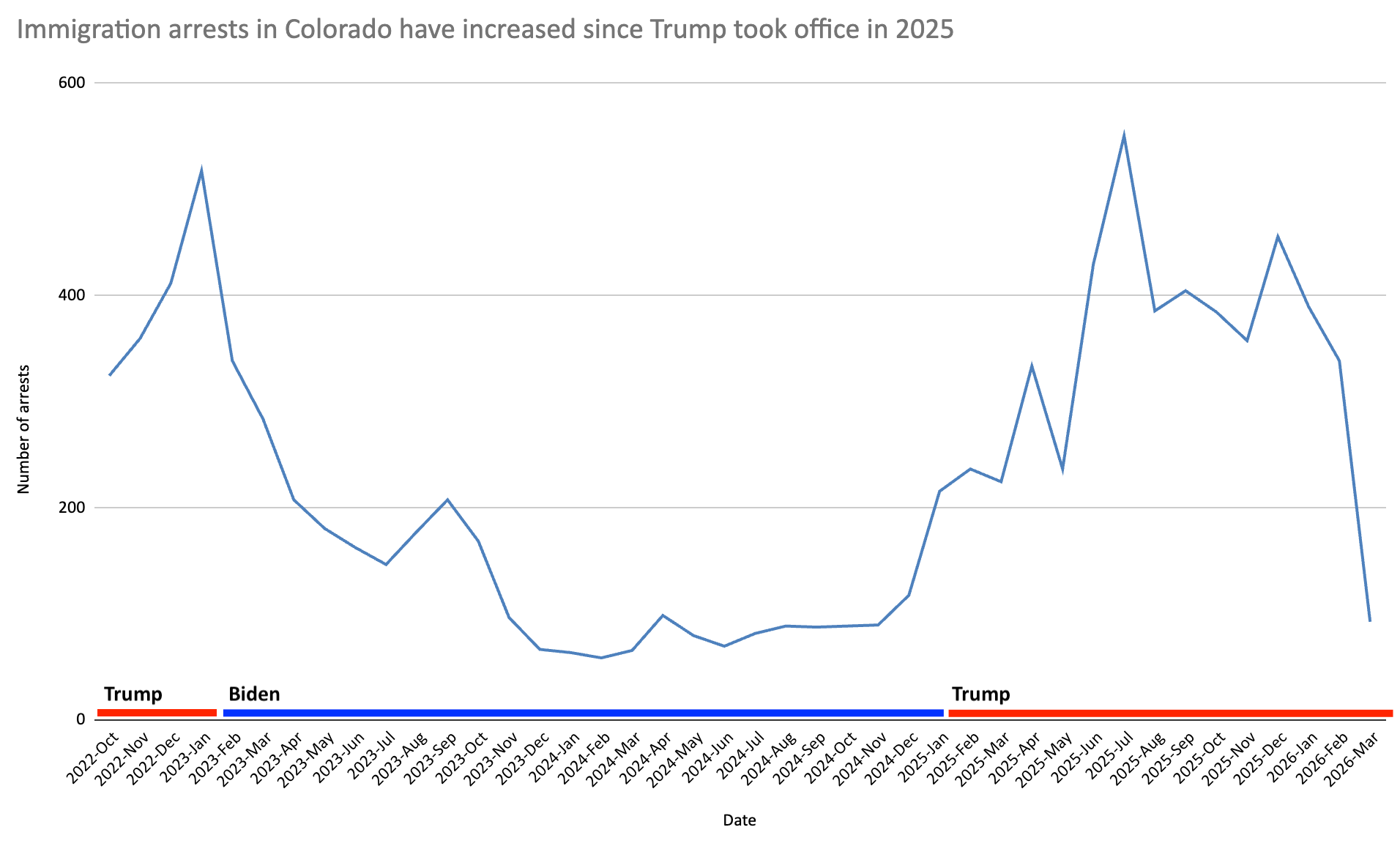
The aggressive deportation drive in Colorado and across the country has succeeded at reducing immigration at the expense of straining crucial economic sectors like agriculture and health care, which are facing worker shortages.
What’s more, U.S. Customs and Immigration Enforcement has ignored federal court orders and made violent threats against immigrant communities, pushing local and statewide authorities to look for ways to protect Coloradans from excessive force by agents.
Need to Know
🚣 Colorado River communities and environmental advocates are exploring various ways to protect the waterway. The Colorado River Indian Tribes gave the river formal personhood rights last year, and some Colorado towns have passed river-specific environmental protections. Other advocates have established private conservation efforts. Record-low snowpack and high heat this winter and spring have added urgency to negotiations over how to manage the future of the river, which is a major water source for much of the Southwest. (Colorado Sun, Denver Post)
📩 Colorado and 22 other states sued the federal government to protect their mail-in voting systems. The lawsuit is one of several legal challenges to President Donald Trump’s executive order last week seeking to create a federal list of eligible voters in order to bar the U.S. Postal Service from sending ballots to anyone not on the list. The states argue the U.S. Constitution gives them – not the president – the authority to administer elections. (Colorado Newsline, Colorado Attorney General’s Office, read the lawsuit)
🥩 A union strike will end at a major meatpacking plant in Greeley after the company agreed to restart negotiations with nearly 4,000 workers seeking better pay, safety policies and other workplace improvements. The union had accused the company of trying to intimidate workers out of striking, which could be illegal. (Associated Press, Denver 7, union website)
Feedback, tips or questions? Reply to this email or send a WhatsApp, Signal or text message to 720-355-1474.
Something Good
🎲 With the NBA playoffs coming up, I’ve been thinking a lot about betting and gambling. So I was fascinated by this article from 404 Media about a new academic paper by a researcher at Colorado State University showing that humans have been gambling a lot longer than we previously thought. An analysis of hundreds of artifacts showed Native Americans played games of chance as far back as 12,000 years ago. Modern sports betting is obviously completely different from these ancient games, but it’s still interesting how long people have found entertainment in wagering.