


The Colorado Bureau of Investigation is in the process of upgrading a statewide gang database, despite little evidence of its efficacy and concerns over civil rights raised by similar databases in other states.
The CBI is required to maintain a database of alleged gang members under a state law passed in the late 1980s. Lawmakers believed that fighting gangs would be easier if cops across the state had a centralized place to share information about them.
But the database has not been working as intended.
Notably, the database currently isn’t functioning at all. The Aurora Police Department said it’s been offline for “several years,” and the Jefferson County Sheriff’s Office also said it’s been down for “quite some time.” But the CBI insisted that it’s only been offline for about a month.
Moreover, none of the biggest police and sheriff’s departments in the state use the database extensively. The Blanket contacted the 20 biggest local law enforcement agencies in Colorado, and of the 18 that responded, all of them said they either don’t use the database or use it very infrequently. None could cite an example where it had helped with an investigation.
Even though the database doesn’t seem to be very useful for Colorado law enforcement, federal agencies also have access to it.
In 2017, the federal immigration agency ICE told 9News that it had used the database to identify someone as an alleged gang member. ICE declined to answer The Blanket’s questions about how it uses the database.
CBI said that it only maintains the database, and that the agencies that use it are responsible for the accuracy of the information. Federal law says that old records are supposed to be purged after five years, but the auto purge function on the current system hasn’t been working for the past few years, meaning it may contain outdated entries.
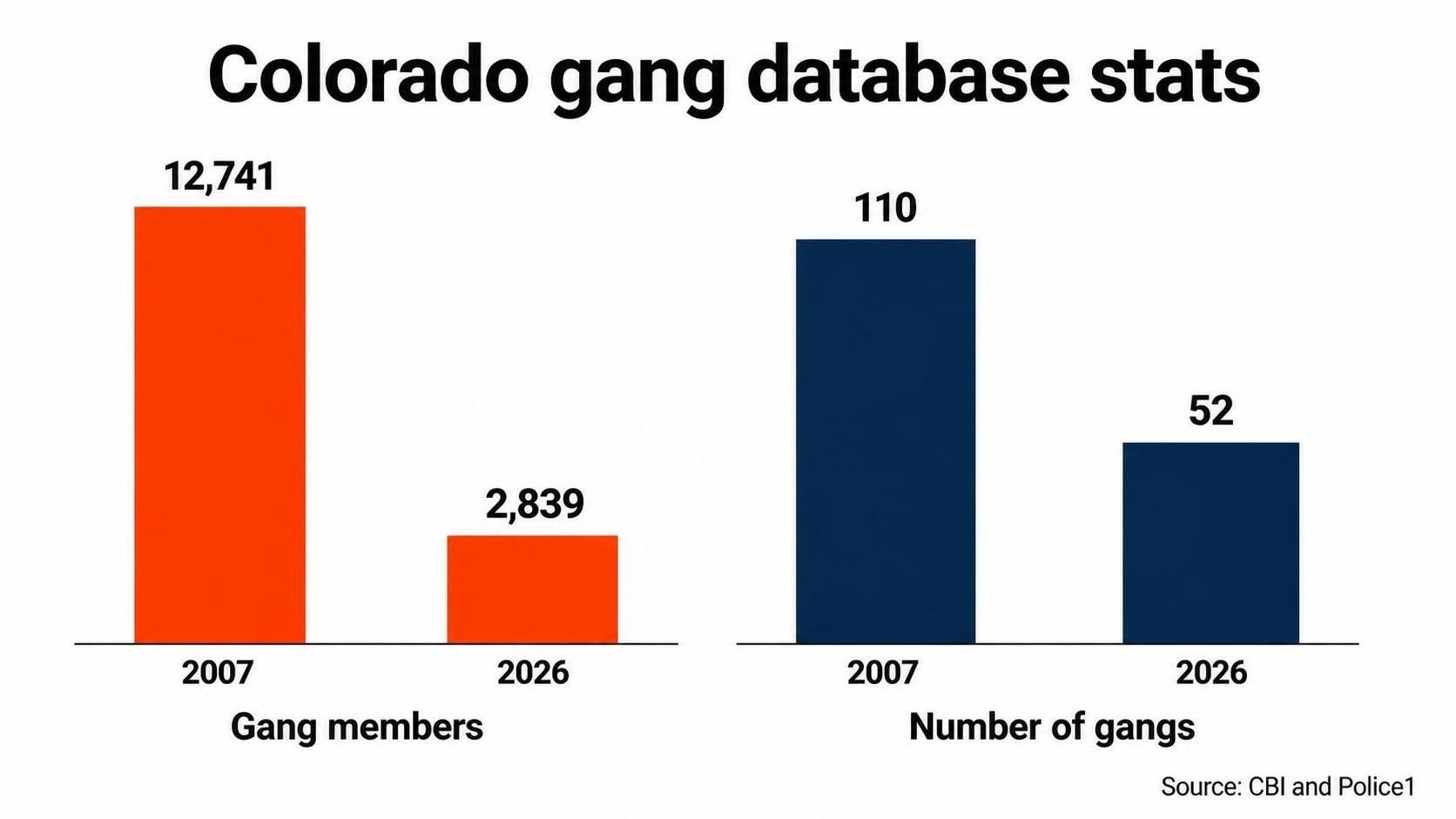
CBI said that before the database went offline, it listed 2,839 gang members and 52 gangs. That’s a significant decrease from the last count I could find, from 2007, when the database had over 12,000 gang members and 110 gangs.
In other places where these databases have been used, they’ve created a lot of controversy. New York City, Chicago and Los Angeles have all faced lawsuits in recent years from people who claimed their gang databases included inaccurate entries and were used for illegal racial profiling.
Those issues, so far, haven’t really come up in Colorado. The Blanket reached out to several organizations that work on criminal justice issues in the state and none of them said it was a big problem.
While the database is offline right now, several law enforcement agencies said they might use the new system more frequently once it’s upgraded. The upgrade will cost a little over $600,000 and is expected to be completed later this year.
NEED TO KNOW
🧑⚖️ Immigration courts in Colorado and across the country are struggling under a huge backlog of cases and political pressure to quickly deport as many people as possible.
Those issues often result in violations of immigrants’ due process rights. The University of Denver’s Court Transparency Project has been sending observers to Colorado’s immigration courts to document how these problems are playing out.
In this extended interview, Ella Iveslatt, a researcher with the project, talks about transparency, due process and access to justice in Colorado’s immigration courts.
COMING UP
😅 It’s been three months since The Blanket launched, and I’ve taken some time to reflect on what’s been working and what hasn’t. One of the main lessons I’ve learned is that my time is better spent creating higher-quality content, even if that means covering fewer topics and publishing less frequently.
So I’m going to spend next week reexamining my workflows and pushing forward some deeper dives that I’ve had on the back burner. I’d like to build this newsletter audience by offering something more than a simple roundup of the videos I’ve published during the week. I want to use this space to go deeper on topics that I cover in video, linking to sources and adding additional details. I also want to add a section rounding up solutions and accountability reporting from other outlets, to keep you informed without having to cover every topic myself.
I would really appreciate any feedback, tips or questions you may have. If there’s something you want to share, you can reply to this email or send a WhatsApp, Signal or text message to 720-355-1474.